
What Design Professionals Notice About Well-Designed Window Treatments
Well-designed window treatments go beyond appearance. This article highlights the professional principles behind custom drapery, including proportion, fabric selection, construction, and hardware—showing how expert decisions create refined, cohesive interiors.

To the untrained eye, window treatments may seem like a finishing touch. To a trained designer, they are a critical architectural element, one that can either elevate a space or quietly undermine it.
At Custom Drapery Designs, our approach is rooted in a deep understanding of interior design principles, material behavior, and spatial balance. The difference shows in the details.
Proportion Is Everything
One of the first things a design professional evaluates is proportion. The relationship between window height, wall space, ceiling line, and drapery placement determines whether a room feels expansive or constrained.
Drapery that is installed too low, too narrow, or without adequate fullness disrupts visual flow. A properly designed treatment, on the other hand, draws the eye upward, enhances symmetry, and creates a sense of intention within the space.
This is why professional window treatments are rarely mounted at the window frame. Placement is calculated based on ceiling height, crown molding, and sight-lines, not convenience.
Fabric Selection Is Strategic
Fabric choice is not just about aesthetics. Designers evaluate how a textile will behave in a specific environment.
Sun exposure, room function, humidity, and daily use all influence fabric performance. A fabric that looks beautiful on a sample may relax, fade, or lose structure if it’s not suited to the space.
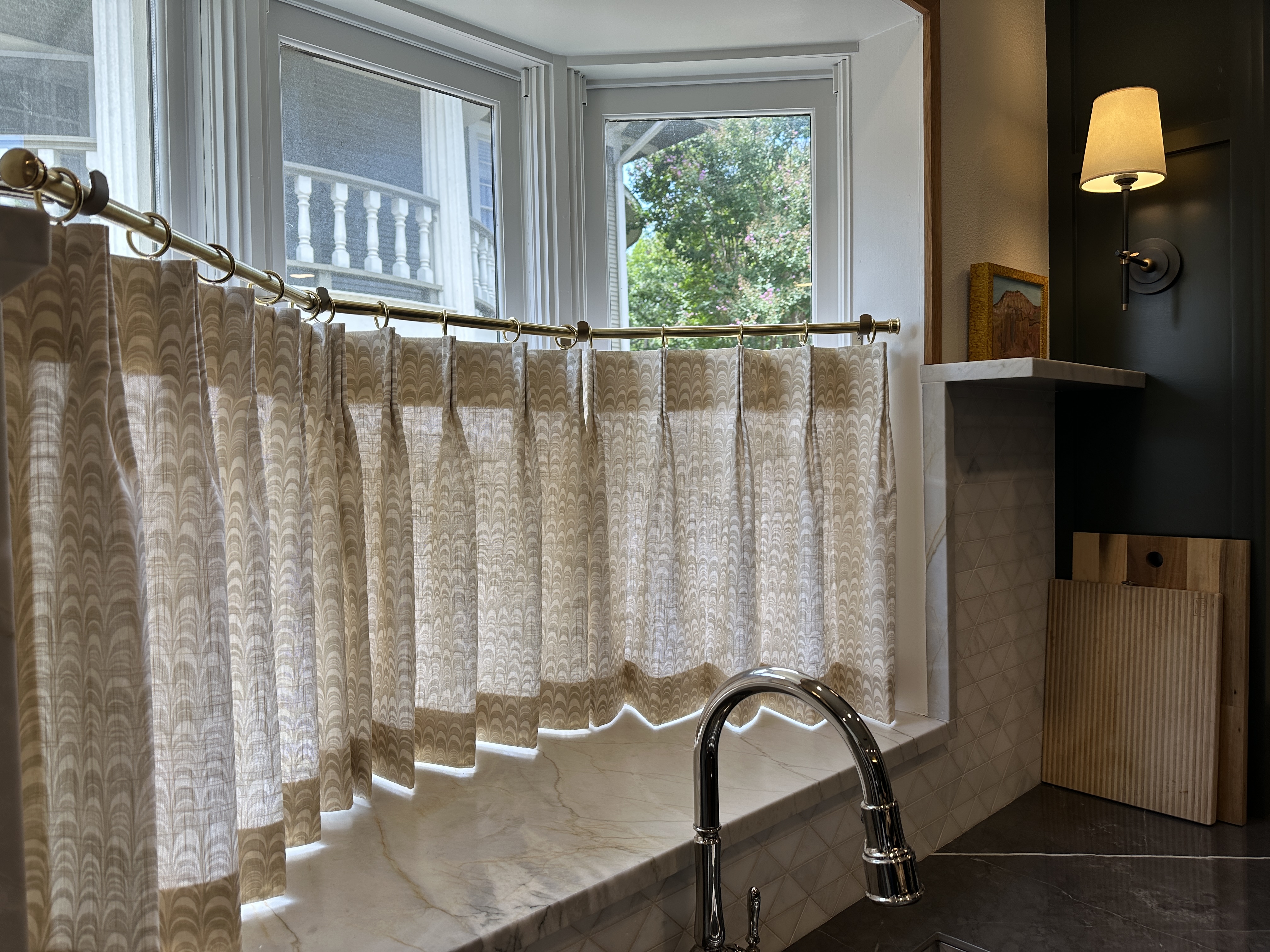
Our selections are guided by how a fabric will drape, stack, filter light, and age, ensuring long-term beauty, not just initial impact.
Fullness and Construction Matter
Professionally designed drapery has a presence that off-the-shelf panels simply can’t replicate. This comes down to construction.
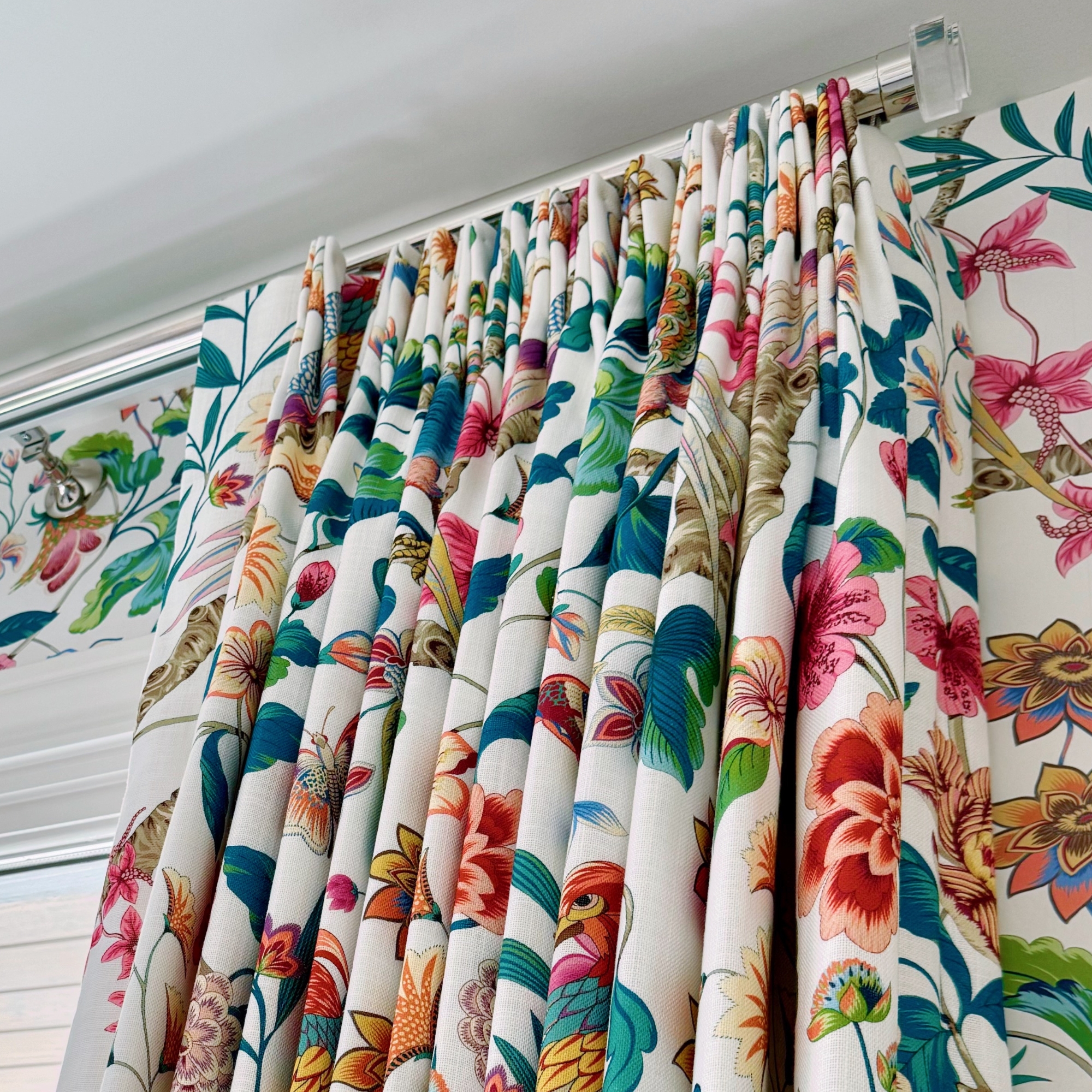
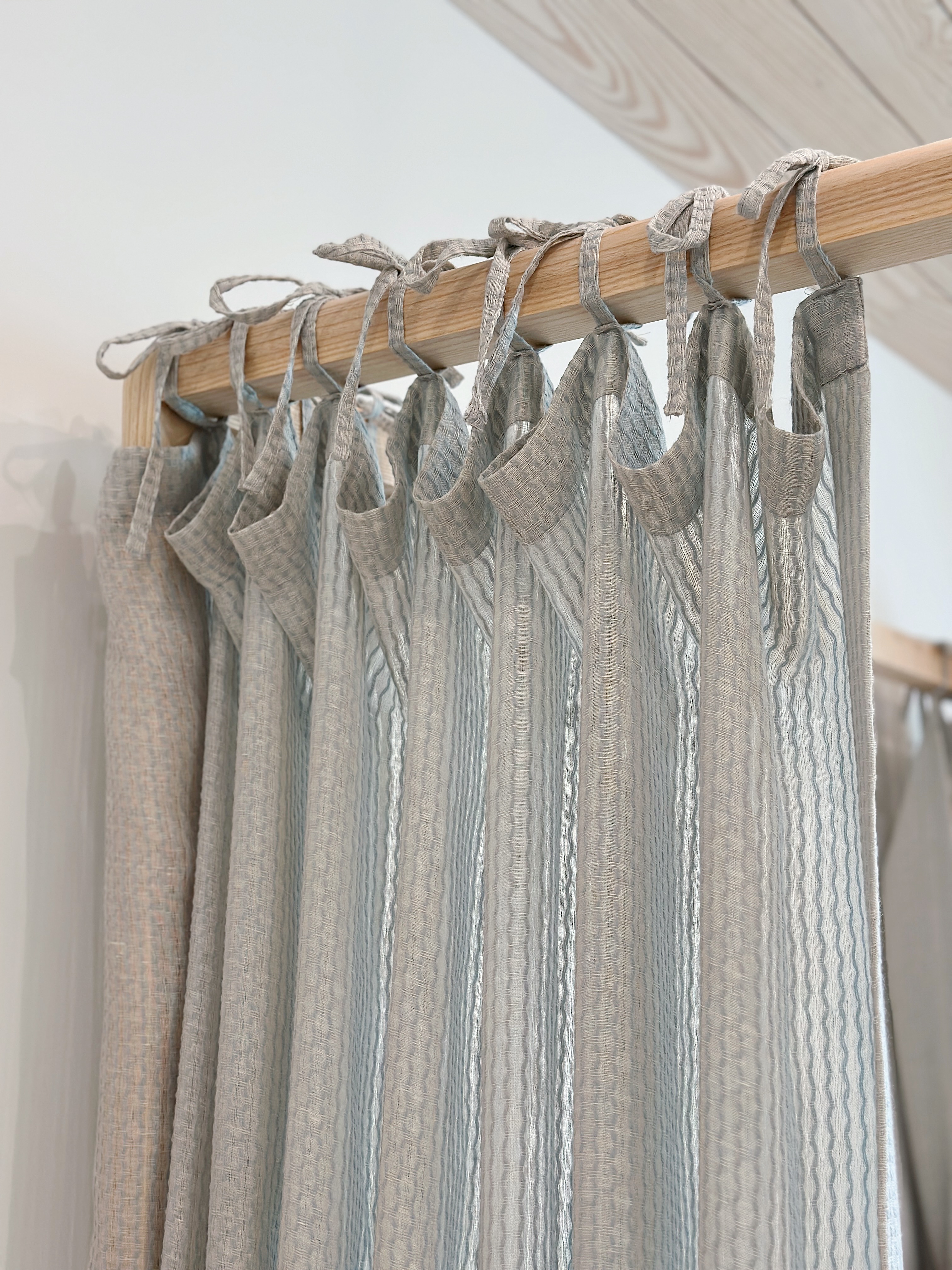
Proper fullness ratios, tailored pleats, and reinforced headers create panels that move fluidly and maintain their shape. These decisions affect how drapery opens, closes, and hangs over time.
It’s a level of craftsmanship that feels effortless, but is anything but accidental.
Hardware Is Chosen With Purpose
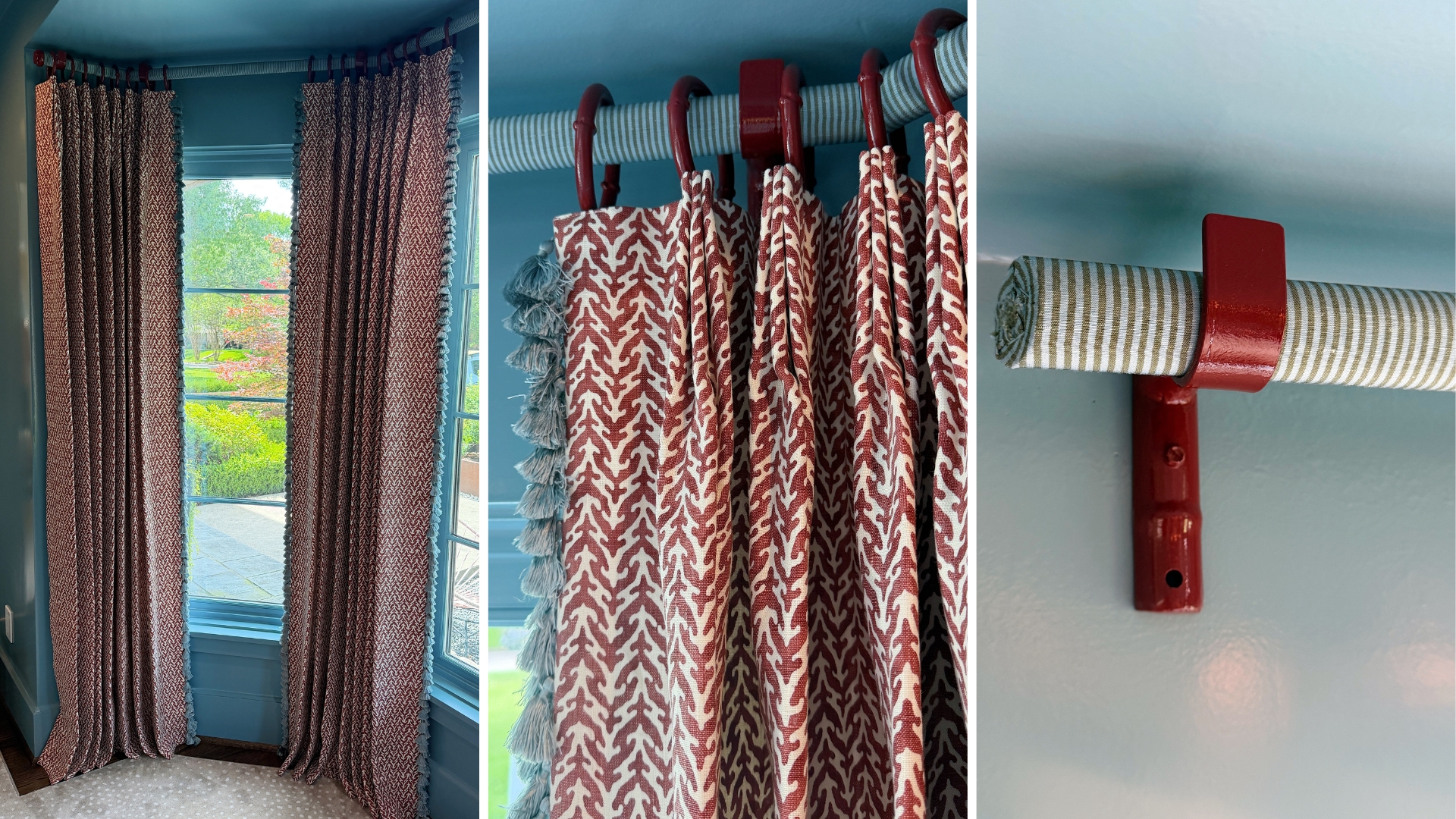
Hardware plays a functional and visual role in window treatments. Weight capacity, projection, draw style, and clearance all factor into the decision.
Whether the solution requires decorative rods, discreet tracks, or motorized systems, the goal is the same: smooth operation and visual harmony. When hardware is thoughtfully selected, it disappears into the design or becomes a subtle architectural feature in its own right.
Window Treatments Complete the Design
Interior designers know that a room isn’t finished until the window treatments are resolved. They soften hard lines, balance scale, and connect furnishings to the architecture of the space.
When designed correctly, drapery doesn’t compete for attention, it supports the room as a whole.
Our Perspective
At Custom Drapery Designs, every decision is informed by experience, training, and a deep respect for interior design as both an art and a discipline.
Because true custom isn’t about excess, it’s about precision.


We want to inspire you!


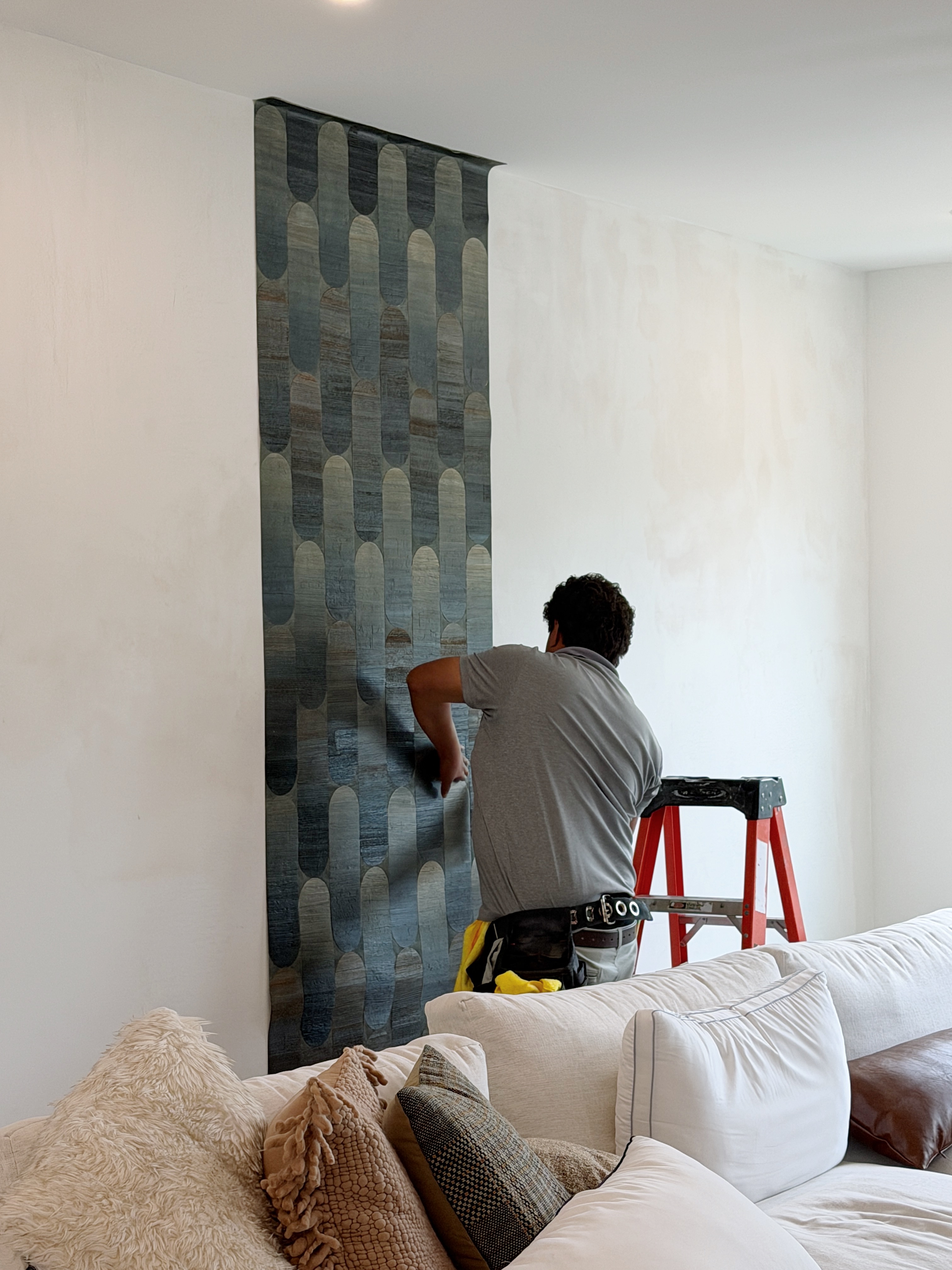
The Art of a Statement Wall and Why Professional Wallpaper Installation Matters
.png)
%20copy.png)


.png)
.png)

.jpg)


Behind the Scenes of a Custom Window Treatment Installation: From Sketch to Reality


.png)

%20copy%202.png)


.jpg)


