CALL US TODAY: (972) 881-5222


Choosing the right window coverings in University Park, TX means balancing privacy, daylight, and visual space. Small bedroom windows benefit from window coverings that feel proportionate to their frames and easy to adjust throughout the day.
A small bedroom can feel larger when its window treatment has a simple profile. Consider whether the room receives early morning sunlight, overlooks a neighboring property, or needs darkness for restful sleep.
The most useful design decision begins with the way the room is used. A guest room may benefit from adaptable light filtering, while a primary bedroom may call for stronger nighttime privacy and room-darkening fabric.
Cellular shades fold into a compact stack and have a tidy appearance that suits narrow frames. Their honeycomb structure traps air and can contribute to a more comfortable indoor environment.
Light-filtering cellular fabrics soften sunlight without making a compact room feel closed in. Room-darkening versions are better suited to bedrooms where controlling early morning brightness is important.
Roller shades are a strong option for contemporary bedrooms because their smooth fabric surface introduces very little visual clutter. When raised, they leave much of the window exposed.
Fabric opacity matters more than appearance alone. A sheer fabric creates an airy mood but may not provide adequate privacy after dark, while an opaque fabric gives a more enclosed feeling when lowered.
Roman shades introduce fabric folds that make a bedroom feel comfortable and considered. Their tailored appearance works particularly well with upholstered headboards, neutral bedding, and understated furniture.
For very short windows, consider the depth of the fabric stack when the shade is raised. A lighter fabric and a restrained fold style can preserve the visible glass area.
Blinds with narrow slats allow homeowners to redirect daylight without fully exposing the room. This flexibility can be helpful when the window faces a street or nearby residence.
A finish that coordinates with the surrounding trim helps the blinds blend into the architecture. The result can feel orderly and spacious even when the bedroom contains several pieces of furniture.
Thoughtful proportions often matter as much as the treatment itself. A few consistent design choices help the window feel connected to the rest of the bedroom rather than isolated from it.
-Choose soft neutral colors that relate to the wall finish.
-Favor compact profiles that preserve visible glass.
-Repeat fabric textures already present in bedding.
-Keep surrounding decorative details restrained.

The following comparison highlights practical differences among common styles, making it easier to match each treatment to the bedroom’s priorities.
When additional softness is desired, a simple shade can be paired with lightweight side panels. Coordinating window coverings for a calmer bedroom atmosphere can help keep the arrangement visually cohesive without overpowering a small window.
Layering works best when one element provides everyday light control and another adds texture. Choosing related tones helps the combination read as one intentional design instead of several competing details.
Before selecting a treatment, compare the window’s dimensions with the room’s privacy and light needs. A deliberate process reduces uncertainty and keeps attention on everyday comfort.
1. Observe the window at morning, afternoon, and night.
2. Measure the frame and note nearby furniture.
3. Compare fabric opacity and operating styles.
4. Coordinate samples with walls, bedding, and trim.
A compact window can still contribute significantly to the room’s design. Explore tailored shades blinds and shutter design choices when comparing sleek, traditional, and softly layered interiors.
Modern bedrooms often look best with understated roller or cellular shades. Traditional spaces may welcome Roman folds or narrow blinds, while transitional interiors can combine a tailored shade with simple fabric panels.
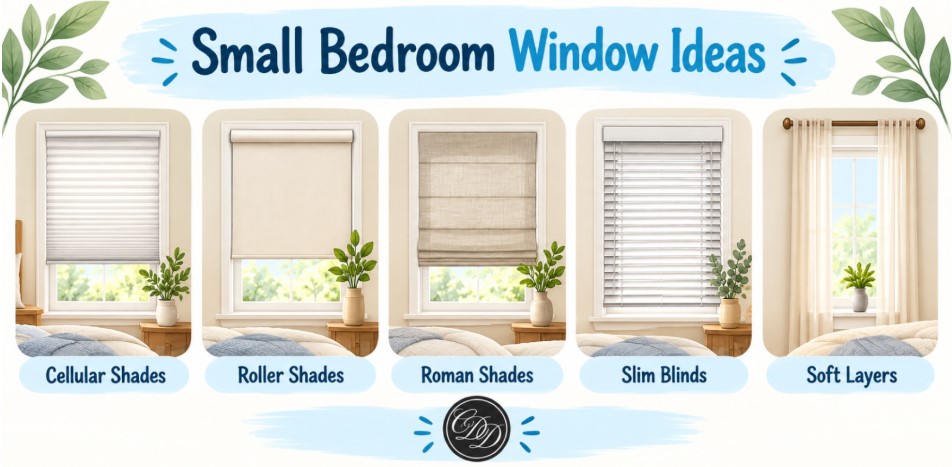
Cellular shades, compact roller shades, and narrow-slat blinds are practical choices because their profiles suit limited frame space.
Not always. Privacy depends on fabric opacity and interior lighting, so examine material samples under both daylight and nighttime conditions.
Yes. A carefully selected fabric and fold style can add softness while remaining proportional to the window.
Curtains are optional. Simple side panels can soften the room, but a streamlined shade alone may be better where wall space is limited.
For thoughtful guidance on window coverings in University Park, TX, Custom Drapery Designs, LLC can help you explore practical styles that complement your space. Arrange a personalized conversation about your bedroom windows or call (972) 881-5222 to discuss your preferences and find a design direction that feels right for your home.