CALL US TODAY: (972) 881-5222


Choosing the right window treatments can influence more than the appearance of a room. They can affect natural light, privacy, everyday comfort, and how the windows coordinate with the surrounding interior. For homeowners considering window shades in Highland Park, TX, customization provides an opportunity to address these practical needs while considering the room's existing design.
Window dimensions, sunlight exposure, privacy requirements, materials, colors, textures, and surrounding furnishings can all influence which shade works best for a particular space. Looking at these factors together can help homeowners choose treatments based on how individual rooms are used rather than relying on the same solution for every window.
Custom shades are created around the specific window and the way the room is used. Instead of trying to make a predetermined treatment work within an existing space, homeowners can consider proportions, light exposure, privacy preferences, colors, textures, and surrounding furnishings before determining an appropriate direction.
Customization becomes particularly useful when windows have unusual dimensions or when several rooms need treatments that coordinate without being identical.
The dimensions and placement of a window can affect how a shade looks and operates. Width, height, surrounding trim, mounting position, and nearby architectural features can all influence the finished treatment.
Accurate measurements also help determine how the shade relates to the window opening and surrounding elements. A treatment selected for the individual window can provide a more appropriate fit while supporting the intended operation and light control.
This is particularly important for large windows, narrow openings, groups of windows, or spaces where nearby furniture and architectural details affect treatment placement.
Every room has different materials, colors, furnishings, and architectural details. Some interiors may benefit from understated shades that coordinate quietly with the surrounding room, while others can accommodate more noticeable textures, patterns, or fabric details.
Considering the existing interior can help narrow the available choices. Wall color, flooring, furniture, trim, decorative fabrics, and other finishes can all influence which shade materials and colors work within the space.
The goal does not have to be an exact match. Instead, the shade can complement the surrounding elements while still providing the privacy and light control required for the room.
Natural light can make interiors feel open and welcoming; yet more light is not always better. Depending on the room, homeowners may want to soften bright sunlight, reduce glare, create greater privacy, or maintain an outdoor view.
Selecting custom window shades for adjustable light control allows homeowners to compare different materials and shade constructions according to the lighting conditions of individual rooms.
For example, homeowners may consider shades based on priorities such as:
-Filtering daylight while maintaining a bright interior
-Creating additional privacy in frequently used spaces
-Managing glare around televisions and computer screens
-Softening incoming light in bedrooms
-Coordinating light control throughout adjoining rooms
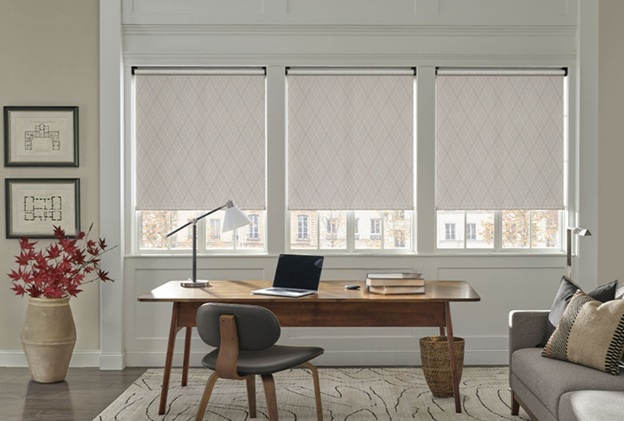
Instead of treating every window identically, it can be helpful to consider what each space actually needs. A home office may require greater glare management, while a living room may place more emphasis on maintaining daylight and outdoor visibility.
Bedrooms, dining areas, and other frequently used spaces can have different privacy and lighting requirements as well. Selecting shades according to these conditions can provide greater flexibility throughout the home.
Window shades occupy noticeable visual space, particularly when a room contains large or numerous windows. Their color, texture, proportions, and operating style can therefore influence how the windows relate to the rest of the interior.
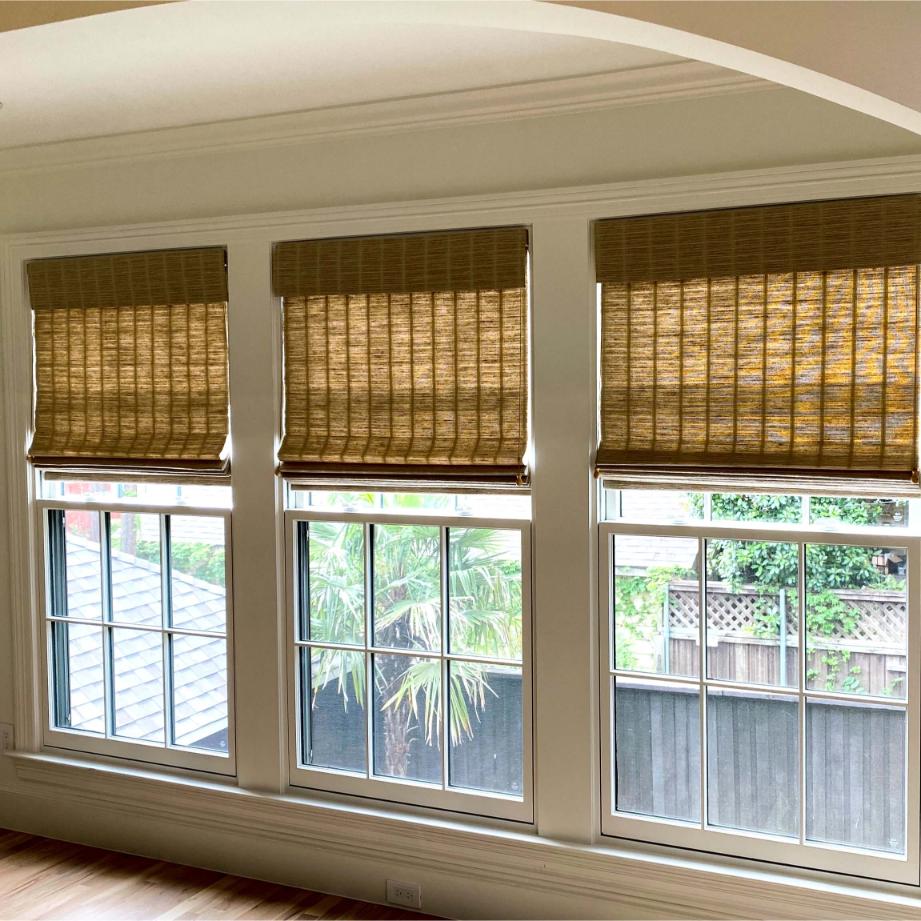
A carefully selected shade can provide a subtle backdrop for furniture and artwork or become a more noticeable design element. Woven materials can introduce texture, while tailored Roman-style treatments can add fabric detail and dimension around the window.
The amount of texture should also relate to the surrounding room. Simpler interiors may accommodate a more noticeable material, while rooms with patterned furniture, artwork, or architectural details may benefit from a quieter treatment.
Homeowners considering layering window coverings for added depth and privacy can also explore how shades work with other treatments. Layering can provide additional flexibility by allowing different materials to address privacy, light management, and visual texture within the same window area.

Customization is especially useful because seemingly small decisions can noticeably affect the finished window treatment. Fabric or material selection, mounting position, proportions, decorative details, and coordination with surrounding finishes can all influence the result.
Mounting position, for example, can affect how the treatment relates to the window frame and nearby trim. Material selection can influence how much daylight is filtered, while proportions can affect how the treatment looks when raised, lowered, or viewed alongside surrounding furnishings.
Rather than selecting shades in isolation, homeowners can consider how these details relate to the rest of the room. Looking at the window and surrounding interior together can help the shades coordinate more naturally with nearby materials and architectural features.
Not every home is built around standard window dimensions. Large expanses of glass, tall windows, groups of windows, and architectural features can require additional planning.
Custom treatments allow these characteristics to be considered during product selection rather than requiring the window to conform to a predetermined treatment size or configuration.
Precise measurements are important because fit can affect both appearance and operation. Window dimensions, trim, molding, mounting areas, nearby furnishings, and adjacent treatments can all influence how a shade should be positioned.
Professional measurements can also help determine whether individual windows within a group should be treated separately or coordinated as part of a larger arrangement.
Planning around the actual window can be especially helpful when dealing with tall openings, unusually shaped areas, or multiple windows positioned close together. The objective is to select a treatment that works with the architectural characteristics of the space while providing the required light and privacy control.
Today's custom window shades can incorporate motorized operating systems, providing an alternative to manually adjusting individual treatments. Motorization can be particularly useful for tall windows, difficult-to-reach areas, or rooms containing multiple shades. However, the benefits depend on the window configuration, daily routines, and the operating features available with the selected product.
The table below outlines common considerations when deciding whether motorized shades are appropriate for different areas of the home.
Motorization can provide additional convenience, but it is not necessary for every window. Homeowners should consider how frequently the shades will be adjusted, how accessible the windows are, and whether the available operating features match their daily routines. The most appropriate choice is one that supports the room's practical needs while coordinating with the selected window treatment design.
One challenge homeowners often encounter is the number of available materials, colors, styles, and operating options. Having more choices does not automatically make the selection process easier.
Professional guidance can help narrow the available options by considering the room, homeowner priorities, measurements, materials, operating preferences, and installation requirements.
For example, a homeowner may begin with a preference for a particular shade style but discover that sunlight exposure, privacy requirements, window dimensions, or operating needs make another configuration more appropriate.
Planning can also extend beyond a single window. When several rooms are involved, treatments can be considered together to maintain continuity without requiring every space to use exactly the same material, color, or style.
Individual rooms can still respond to their specific lighting and privacy needs while sharing certain design characteristics with the rest of the home.
For homeowners who value precise fit, adjustable light control, privacy, and window treatments selected for the individual room, custom shades provide several practical and design considerations beyond simply covering the window.
Materials, proportions, operating methods, sunlight exposure, privacy requirements, and surrounding interior details can all influence which treatment is appropriate. Considering these factors together allows homeowners to compare options based on how each room functions throughout the day.
If you are exploring window shades in Highland Park, TX, Custom Drapery Designs, LLC can help you compare materials, operating options, light-control features, and configurations for different areas of the home. Contact our team to review custom window shade options or call (972) 881-5222 to discuss your window treatment needs.