CALL US TODAY: (972) 881-5222


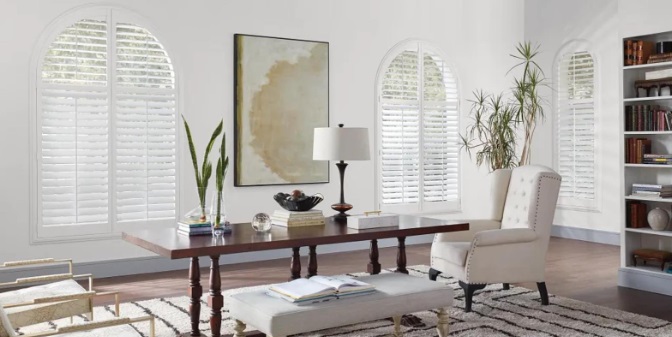
Modern design is defined by intention, balance, and restraint, and the window treatments you choose to play a major role in reinforcing that look. Homeowners searching for window shutters in Lakewood, TX are usually drawn to shutter styles that feel architectural rather than decorative. Clean profiles, controlled lighting, and finishes that work with modern materials all contribute to a space that feels composed rather than cluttered.
That clarity matters because shutters are not background elements. They sit at eye level, frame natural light, and influence how every other design choice is perceived. When selected with care, shutters reinforce modern interiors by aligning with straight lines, open layouts, and purposeful simplicity. In the middle of that design conversation, Custom Drapery Designs, LLC focuses on matching shutter styles to the way a home is structured, not just how it looks on a single day.
Modern interiors rely heavily on proportion. Wide-louver shutters support that goal by reducing visual breaks across the window and allowing the eye to move easily through the room. Narrow louvers introduce frequent lines that can compete with minimalist furnishings, while wider spacing feels calmer and more deliberate.
These shutters work especially well in rooms with high ceilings or large window openings, where scale matters. The broader slats mirror the horizontal lines found in contemporary cabinetry, flooring planks, and modern millwork. Light control remains precise, but the overall impression stays relaxed and uncluttered. When finished in neutral tones, wide-louver shutters quietly anchor the room without drawing attention away from architectural features or curated decor.
A modern look depends on uninterrupted surfaces. Shutters designed without visible tilt rods create that continuity by keeping the louver face clean and uniform. This approach allows the window to read as a single, intentional element instead of a collection of moving parts.
Designers lean toward this style when the goal is subtle in sophistication. Without a central control bar, the shutters feel more like built-in panels than adjustable coverings. That restraint pairs well with open-concept spaces and rooms where symmetry matters, especially when paired with thoughtful shutter selection details that account for proportion, finish, and placement from the start. Designers lean toward this style when the goal is subtle in sophistication. Without a central control bar, the shutters feel more like built-in panels than adjustable coverings. That restraint pairs well with open-concept spaces and rooms where symmetry matters. A related discussion on shutter-buying considerations clarifies why small construction details influence how refined a finished space feel.
Modern homes frequently include wide windows, glass walls, or sliding doors that demand solutions capable of moving smoothly while staying visually light. Panel-based shutters on discreet track systems address this need without adding bulk.
These shutters glide rather than fold, keeping their profile slim even when stacked. When open, they preserve views and daylight. When closed, they create a uniform plane that aligns with contemporary walls and ceiling lines. Placement matters here, and professional planning ensures panels align correctly with window dimensions and traffic patterns, especially in shared living spaces.
Material choice has a direct impact on how modern shutters perform visually. Composite constructions provide consistent surfaces that accept paint evenly and resist environmental stress, making them well suited for contemporary interiors where uniformity is key.
These shutters support finishes ranging from soft whites to muted grays and deeper tones used as intentional contrast. Because the surface remains stable, the shutters maintain crisp edges and tight seams over time. Many homeowners pair these materials coordinated shutter and shade solutions to maintain a cohesive look throughout the home without mixing competing textures.

Modern design is not only about appearance; it is also about how space functions. Motorized shutter systems align with that mindset by removing visual clutter while improving daily usability. Controls remain hidden, preserving clean lines while allowing precise adjustment.
Automation works particularly well in rooms with tall windows or multiple exposures, where manual operation would interrupt the flow of the space. Integration with broader home systems allows shutters to respond to time of day or room usage, supporting comfort without visual compromise. This approach reinforces the idea that modern design should feel effortless, not ornamental.
Modern interiors succeed when every element serves a purpose, and nothing feels excessive. Shutters that support clean lines, thoughtful proportions, and controlled light become part of the architecture rather than an accessory layered on top. Selecting the right style requires understanding how materials, scale, and movement interact within your space. Working with a team that prioritizes design alignment ensures that window shutters in Lakewood, TX homeowners choose to feel intentional from every angle. Custom Drapery Designs, LLC approaches that process with a design-first mindset rooted in experience, craftsmanship, and a clear understanding of how modern homes are meant to function. For those refining a contemporary space, learning more about our design philosophy is a natural next step.